Rodent Pest Control Services in Delhi NCR
BugBarrier provides rodent pest control services in Delhi NCR for residential properties, using an inspection-led approach to identify rodent activity, possible entry points and areas requiring treatment.
Our approach can involve rodent trapping, baiting, entry-point identification and rodent-proofing guidance, depending on the property and infestation condition.
Inspection First
Identify visible signs and affected areas.
Residential Service
Focused on termite problems in homes.
Delhi NCR Coverage
Service availability across selected NCR locations.
Clear Treatment Process
Understand what is being inspected and treated.
Signs You May Have a Rodent Infestation
You do not always need to see a rat or mouse to know that rodents may be present.
CDC identifies droppings and gnaw marks as important signs of rodent presence. Rodents can also leave nesting material and other evidence in concealed areas.
Rodent Droppings
Small droppings may appear inside kitchen cabinets, drawers, storage areas, behind appliances or along routes used by rodents.

Gnaw Marks
Rats and mice gnaw on materials for access and other reasons. Marks may appear on food packaging, wood, plastic, insulation, pipes or electrical components.
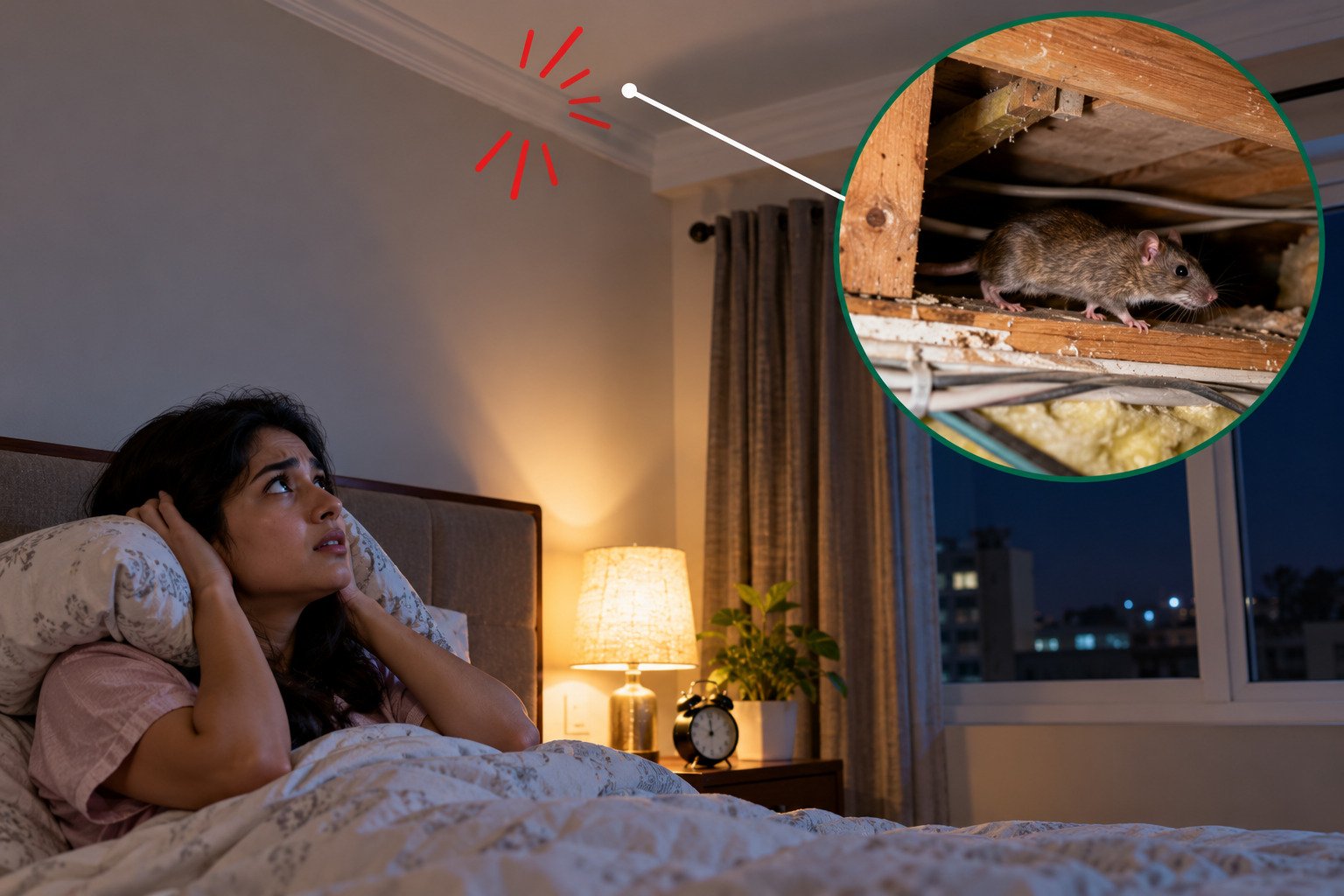
Scratching or Movement Sounds
Scratching, running or movement sounds at night can sometimes indicate rodent activity inside ceilings, walls or other concealed areas.
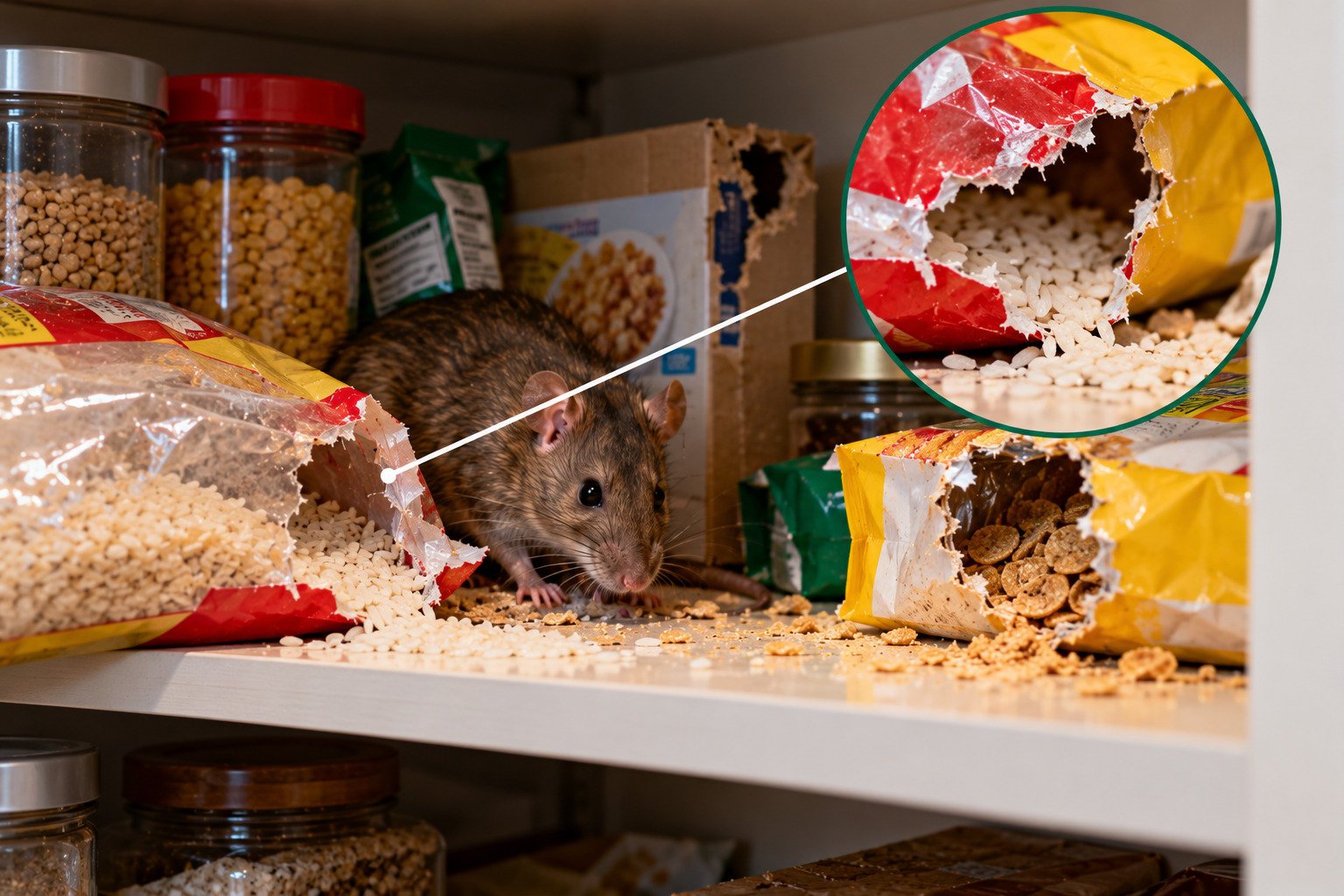
Damaged Food Packaging
Rodents may chew through food packets, cardboard containers and other packaging to access food.

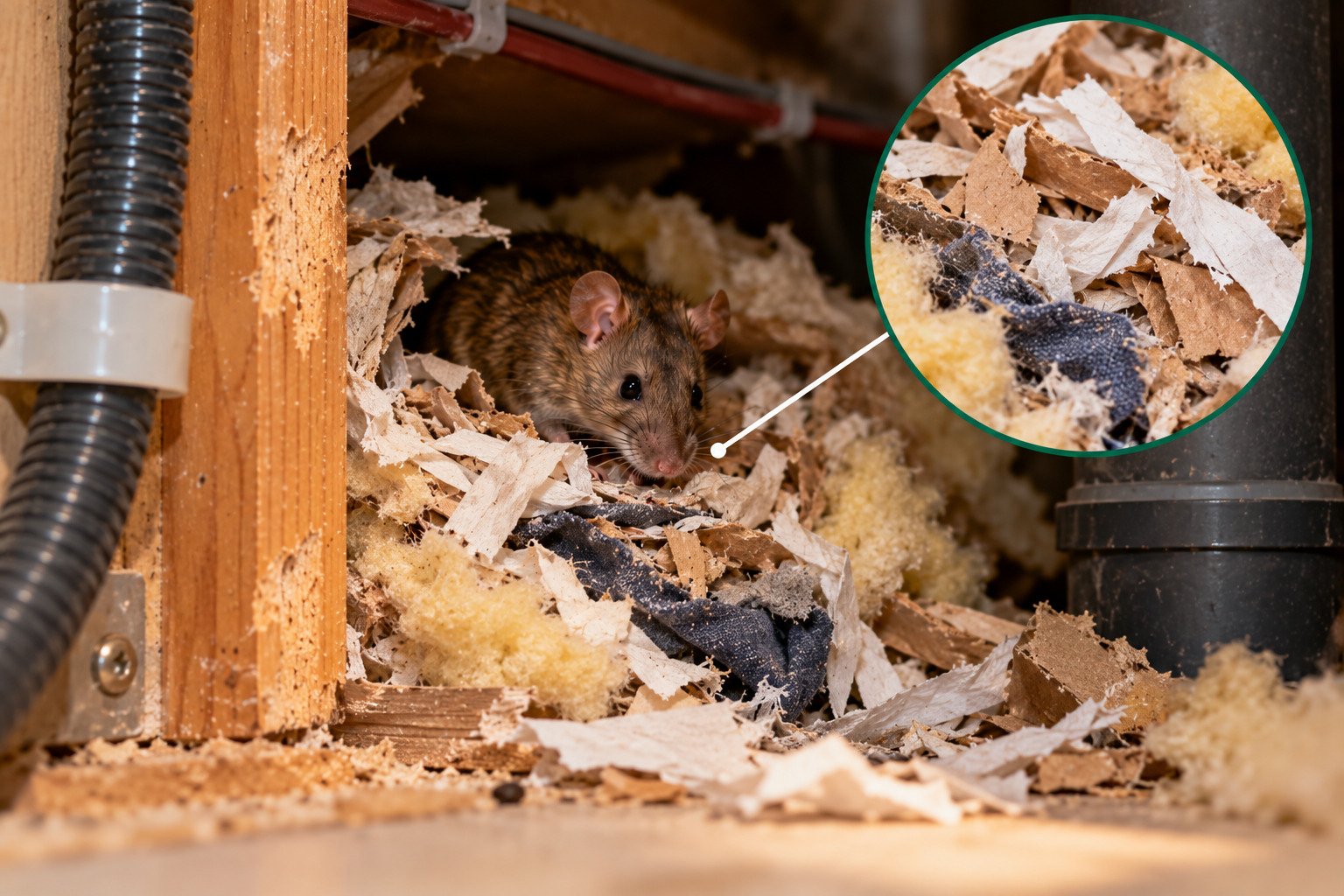
Nesting Material
Shredded paper, fabric, insulation and other soft materials may be used to create nests in protected locations.
Rodent Urine or Strong Odour
Persistent odour around cabinets, storage areas, false ceilings or concealed spaces can sometimes be associated with rodent activity.

Holes and Entry Gaps
Gaps around pipes, doors, drains, utility lines, vents and other openings can provide access into a building. CDC notes that mice can enter through openings around 1/4 inch wide.

Why Rodent Control Is Important for Your Home
Rodents are more than a nuisance. They can contaminate food and surfaces with urine, droppings and saliva and can damage property by gnawing on materials. CDC notes that rodents can transmit diseases through direct contact and through contamination involving their waste.
Simply removing one visible rat may therefore not solve the underlying problem.
A proper rodent-control approach should consider where rodents are entering, where they are moving, what is attracting them and whether activity remains after treatment.
Protect Food & Kitchen Areas
Rodent activity around kitchens, pantries and food-storage areas can create contamination concerns.
Reduce Property Damage
Rodents can gnaw on wiring, insulation, wood, plastic and other materials.
Identify Hidden Activity
Rodents often remain inside concealed spaces, so droppings, gnaw marks and nesting material can be useful indicators even when rodents are not visible.
Address Entry Points
Removing existing rodents without addressing access points can leave the property vulnerable to further activity. CDC recommends checking and sealing gaps and holes around buildings.
Our Rodent Treatment Process
Every rodent problem is different.
The appropriate approach can depend on the type of property, observed activity, accessible areas, possible entry points, food sources and nesting locations.
Our process is designed to understand the problem before deciding on treatment.
Rodent Inspection
We inspect accessible areas for droppings, gnaw marks, nesting material, movement routes and possible entry points.
Activity Assessment
We assess where rodent activity has been noticed and which areas may require closer attention.
Treatment Recommendation
The recommended approach can include trapping, baiting, monitoring or proofing measures depending on the property and infestation condition.
Rodent Control Treatment
Treatment is carried out in identified areas using the appropriate method for the property and observed rodent activity.
Prevention & Follow-Up Guidance
We explain practical measures relating to food storage, sanitation, entry points and monitoring that may help reduce future rodent activity.
Rodent Prevention Tips for Homes
Treatment addresses an existing rodent problem, but preventing access to food, water and shelter can also help reduce the conditions that attract rodents.
CDC recommends reducing access to food, water and shelter and sealing gaps and holes around buildings.
Seal Food Properly
Keep food in tightly closed containers and clean food spills promptly.
Manage Household Waste
Use covered waste containers and avoid leaving food waste accessible for long periods.
Check Entry Points
Inspect gaps around doors, pipes, drains, utility lines and other openings.
Reduce Clutter
Storage areas with excessive clutter can provide rodents with additional hiding and nesting opportunities.
Check Kitchens Regularly
Pay attention to cabinets, areas under sinks, behind appliances and other food-related locations.
Monitor Previous Problem Areas
If rodents have previously been present, continue checking for new droppings, gnaw marks or other signs.
Address Outdoor Conditions
Keep areas around the property reasonably clean and reduce accessible food and shelter where possible.
Rodent Control Cost in Delhi NCR
The cost of rodent pest control in Delhi NCR is not the same for every property. A treatment estimate can depend on:
Property Type
Infestation Level
Entry-Point Sealing
Accessibility
Treatment Method
Rodent Pest Control Services Across Delhi NCR
BugBarrier provides rodent pest control services for residential properties across selected areas of Delhi NCR.
Rodent Control Service Delhi
We provide rodent control services for homes in selected areas of Delhi.
Rat Control Service Noida
We provide rat and mouse control services for homes in selected areas of Noida.
Rodent Control Service Ghaziabad
We provide rodent inspection and treatment services for homes in selected areas of Ghaziabad.
Rat Control Service Gurugram
We provide rodent control services for residential properties in selected areas of Gurugram.
Rodent Control Service Faridabad
We provide rodent inspection and treatment services for homes in selected areas of Faridabad.
Why Choose BugBarrier for Rodent Control?
BugBarrier provides Rodent pest control services for residential properties across selected areas of Delhi NCR.
Inspection First
We start by understanding the visible signs, affected areas and possible entry points rather than assuming every property requires the same treatment.
Targeted Rodent Control
Treatment is based on observed rodent activity and the conditions of the property.
Entry-Point Assessment
We look for accessible gaps and openings that may contribute to rodent entry.
Delhi NCR Service Coverage
BugBarrier serves selected residential locations across Delhi NCR.
Prevention Guidance
Along with treatment, we explain practical measures that can help reduce food, shelter and entry opportunities for rodents.
Transparent Booking
You can contact BugBarrier to discuss the rodent problem and arrange an inspection for your property.
How BugBarrier Protects Your Property from Rodents
Complete Colony Elimination
Long-Term Structural Protection
Safe and Professional Application
Suitable for Homes and Businesses
Preventive Termite Management
Rodent Control Work by BugBarrier
Every rodent problem is different. Real treatment observations can help homeowners understand where rodent activity occurs, how entry points are identified and why inspection is important before treatment.
What Our Delhi NCR Customers Say
Real experiences from homeowners and businesses we’ve helped with rodent control.
Ritik Gupta
Paschim Vihar, Delhi
Ritik Gupta
Paschim Vihar, Delhi
Ritik Gupta
Paschim Vihar, Delhi
Ananya R.
Dwarka, Delhi
Rahul Kumar
Rohini, Delhi
Frequently Asked Questions About Rodent Control
Find Quick Answer to Common Question About Our Services
How do I know if I have rats or mice in my house?
Common signs include droppings, gnaw marks, nesting material, damaged food packaging and movement sounds. CDC identifies droppings and gnaw marks as common signs of rodent presence.
How do rats enter houses in Delhi?
Rodents can enter through gaps around doors, pipes, drains, utility lines, vents and other openings. Small openings can be enough for mice to enter.
Why do I hear rats at night?
Rats and mice can become active when a property is quieter. Scratching or movement sounds inside ceilings, walls, cabinets or other concealed areas can be one indication of rodent activity, although an inspection is needed to determine the cause.
Can rats damage electrical wires?
Rodents can gnaw on electrical wiring and other materials. If you find damaged wires or insulation together with other signs of rodent activity, arrange an inspection and have electrical damage assessed by a qualified electrician where necessary.
What is rodent proofing?
Rodent proofing involves identifying and addressing suitable entry points and access gaps that may allow rodents to enter a building. CDC recommends checking and sealing gaps and holes where appropriate.
Is rodent baiting better than trapping?
Neither method is automatically suitable for every property. The appropriate approach depends on the infestation, property conditions, rodent activity and accessibility. Professional rodent management may use trapping, baiting, exclusion and monitoring together.
Are rodent bait stations safe around children and pets?
Rodenticide products can be harmful if misused. Baits and traps should be positioned where children and pets cannot access them, and product instructions should be followed.
Therefore, don’t market rodent poison as “completely safe for children and pets.”
Can rats come back after treatment?
Yes. New activity can occur if rodents continue to have access to food, shelter or entry points. This is why rodent proofing and environmental measures are important alongside treatment.
How can I prevent rats from entering my kitchen?
Keep food sealed, clean spills promptly, manage waste, check gaps around pipes and cabinets and inspect potential entry points. CDC specifically recommends securing food and sealing building openings.
What should I do if I find rat droppings?
Avoid sweeping or vacuuming dry rodent droppings. CDC recommends wetting droppings with an appropriate disinfectant and following safe cleanup procedures.
Can rodent droppings make people sick?
Rodents can carry diseases and their urine, droppings and saliva can contribute to disease transmission. Appropriate precautions should therefore be taken when cleaning rodent-contaminated areas.
Do rats live inside false ceilings?
They can use concealed spaces such as ceilings and wall areas as movement or nesting locations. If you hear movement above a false ceiling, professional inspection can help determine whether rodents are responsible.
Can rodents damage food and contaminate kitchens?
Yes. Rodents can access food-storage areas and contaminate surfaces or food through urine, droppings and saliva.
Does rodent control require more than one visit?
It can. Follow-up may be appropriate depending on the infestation, remaining signs, treatment method and whether entry points have been addressed.
How much does rodent pest control cost in Delhi NCR?
There is no single price for every property. Cost can depend on property size, infestation level, affected areas, treatment method, accessibility and rodent-proofing requirements.
Does BugBarrier provide rodent pest control in Delhi NCR?
BugBarrier provides rodent inspection and treatment services for selected residential locations across Delhi NCR. Contact us to confirm availability for your location.
Concerned About Rats or Mice in Your Home?
Don’t rely only on the rat or mouse you have seen.
Droppings, gnaw marks, nesting material and entry points can provide important clues about rodent activity.
Book a professional inspection to understand where rodents may be entering, where activity is occurring and what treatment approach may be appropriate for your property.